
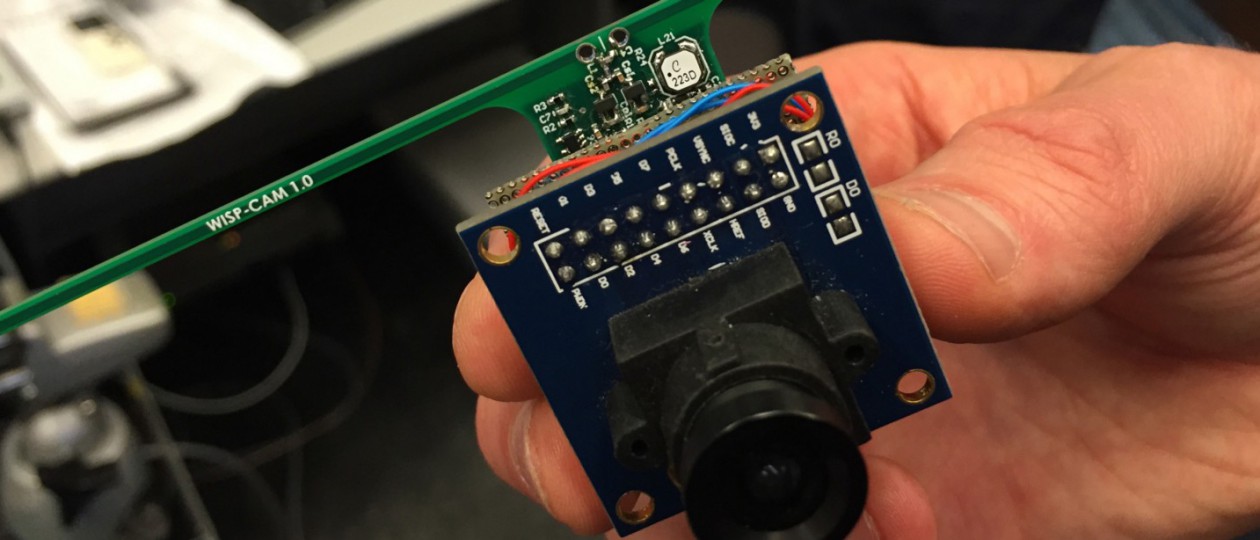
In a cluttered lab at the University of Washington in Seattle, a small gadget is slowly beaming a photo to a nearby computer. It is devices like this that could make up the much-hyped Internet of Things, a vision of billions of interconnected sensors that will one day give the physical world a digital voice.
Imagine trees monitoring pollution, bridges that report when they need repair or implanted medical devices conducting check-ups dozens of a times a day. Now imagine having to revisit each of these billions of sensors every month to change or recharge their batteries. The problem is that communicating via cellphone signals or Wi-Fi takes a lot of power, which means large batteries and thus, bulky, expensive devices.
But this chip in Seattle doesn’t need a radio. And it doesn’t even have a battery at all. It relies on two breakthroughs that could kick-start an Internet of Things sooner than anyone thought possible. “Electronics have got a trillion times more efficient in the last 50 years,” said Joshua Smith, the professor leading the effort to develop the technology. “But the radio signals in the air have been about the same.”
Smith has realized that the whispers of energy contained in everyday television broadcasts, even from many miles away, can be harvested using nothing more than an antenna and some clever electronics. But while this energy is enough to power the newest ultra-efficient sensors, it is still hundreds of times less than is needed for Wi-Fi communication — or traditional Wi-Fi communication, at least. Smith’s revolutionary innovation offers a way for tiny chips to send data to Wi-Fi devices like laptop computers and smartphones without broadcasting anything at all.